
Winter can be brutal for outdoor cats. Whether they are feral, stray, or barn cats, they need extra help to stay warm and safe. Keeping outside cats warm in winter is not just about comfort—it’s about survival. Without proper shelter, food, and care, outdoor cats can suffer from hypothermia and frostbite when temperatures drop.
The good news? With the right approach, you can keep outdoor cats warm and protected all winter long. Below, we’ll cover essential tips, from the best cat shelters to heated food and water solutions.
1. How Cold Is Too Cold for Outdoor Cats?
Understanding a Cat’s Cold Tolerance
Outdoor cats are resilient, but they have their limits:
- Above 45°F (7°C): Safe for most outdoor cats.
- 32°F (0°C) or below: Frostbite and hypothermia risk increases.
- 15°F (-9°C) or below: Dangerous, life-threatening cold.
Signs of Hypothermia & Frostbite in Cats
If you care for outdoor cats, watch for these symptoms:
- Hypothermia: Shivering, sluggishness, cold paws, slow breathing.
- Frostbite: Pale, gray, or blue skin (common on ears, tail, and paws).
Action Tip: If you notice signs of frostbite or hypothermia, bring the cat inside and warm them up slowly. Seek veterinary care if symptoms are severe.
For more on how feral cats survive outdoors, check out this Wikipedia article on feral cats.
2. Choosing the Best Outdoor Cat Shelter
What Makes a Good Winter Cat Shelter?
A proper outdoor cat shelter should:
- Be insulated to trap heat.
- Have a small entrance to block wind.
- Be elevated to prevent cold transfer from the ground.
- Use waterproof materials to keep moisture out.
- Be easy to clean to prevent buildup of bacteria and pests.
DIY Outdoor Cat Shelter Options
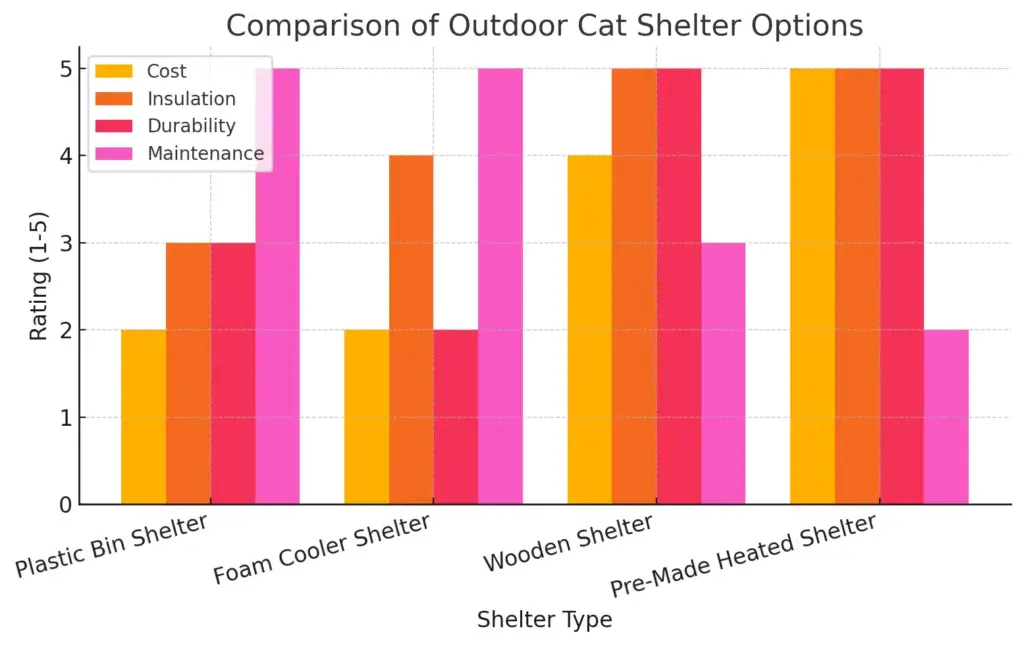
Plastic Bin Shelter (Budget-Friendly DIY)
- Two nesting plastic bins with straw between layers.
- Small 6-inch entrance hole.
- Mylar blankets for extra warmth.
Foam Cooler Shelter (Simple & Insulated)
- Thick foam cooler with an entrance cutout.
- Covered with trash bags for waterproofing.
- Insulated with reflective foil or extra straw.
Wooden Shelter with Straw (Long-Lasting & Durable)
- Best for long-term use.
- Hinged roof for easy cleaning.
- Filled with straw for insulation.
- Painted or sealed for extra durability against rain and snow.
Top Pre-Made Heated Outdoor Cat Shelters
If you prefer a ready-made solution, here are some top-rated choices:
- K&H Heated Outdoor Cat House
- ecoFLEX Albany Outdoor Cat Shelter
- Petsfit Insulated Outdoor Cat House
- Aivituvin Outdoor Feral Cat House (multi-level design for colony cats)
3. Bedding & Insulation: What Works Best?
Best Bedding for Outdoor Cats
- Straw (Not Hay!): Repels moisture, provides excellent insulation.
- Mylar Blankets: Reflect body heat, waterproof, and reusable.
- Foam Insulation Panels: Great for lining shelter walls for extra warmth.
- Fleece-lined pet beds: Work best when placed inside an enclosed shelter.
What to Avoid
- Blankets & Towels: Absorb moisture and freeze.
- Hay: Gets damp and molds quickly.
- Newspapers: Flattens, losing insulation value.
- Shredded paper: Can compact over time and lose effectiveness.
4. Heated Solutions: Are They Necessary?
Best Heated Bedding for Outdoor Cats
- Self-warming cat beds (use mylar technology).
- Microwavable heating pads (K&H Microwavable Pet Bed Warmer).
- Electric heated pads (K&H Lectro-Soft Heated Outdoor Bed).
- Heated shelters with built-in thermostats for safety.
Safety Tips for Heated Products
- Use only outdoor-rated heating pads.
- Never use heating lamps—they are a fire hazard.
- Check cords regularly to prevent chewing damage.
- Ensure the shelter has ventilation to prevent overheating.
5. Food & Water Solutions for Winter
Keeping Cat Food from Freezing
- Serve warm, moist food (canned food retains heat longer).
- Use insulated feeding stations.
- Elevate food bowls off the cold ground.
- Provide higher-calorie food in winter to help cats maintain body heat.
Preventing Water from Freezing
- Use heated water bowls (K&H Thermo-Kitty Water Bowl).
- Place bowls in sunny, sheltered spots.
- Add a ping pong ball—movement helps slow freezing.
- Check water levels multiple times per day in extreme cold.
FAQs: Keeping Outside Cats Warm in Winter
Can outdoor cats survive extreme blizzards?
Yes, but only if they have a well-insulated, dry shelter and an adequate food supply. It’s best to check on their shelters frequently and ensure entrances are not blocked by snow.
How often should I replace bedding in an outdoor cat shelter?
Replace straw bedding every few weeks to prevent mold and parasites. Mylar blankets and insulated materials should be checked regularly for dampness or damage.
Should I feed outdoor cats more in winter?
Yes! Outdoor cats burn more calories to stay warm, so increasing their food portions can help them maintain body weight and energy levels.
Conclusion
Outdoor cats can survive winter with the right shelter, food, and care. Use insulated shelters, proper bedding, and safe heating solutions to keep them comfortable.
Want the best heated shelters? Check out The Best Heated Outdoor Cat Houses for top recommendations.
Share this guide on social media to help others care for outdoor cats in winter! 😺