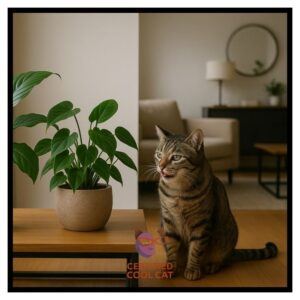
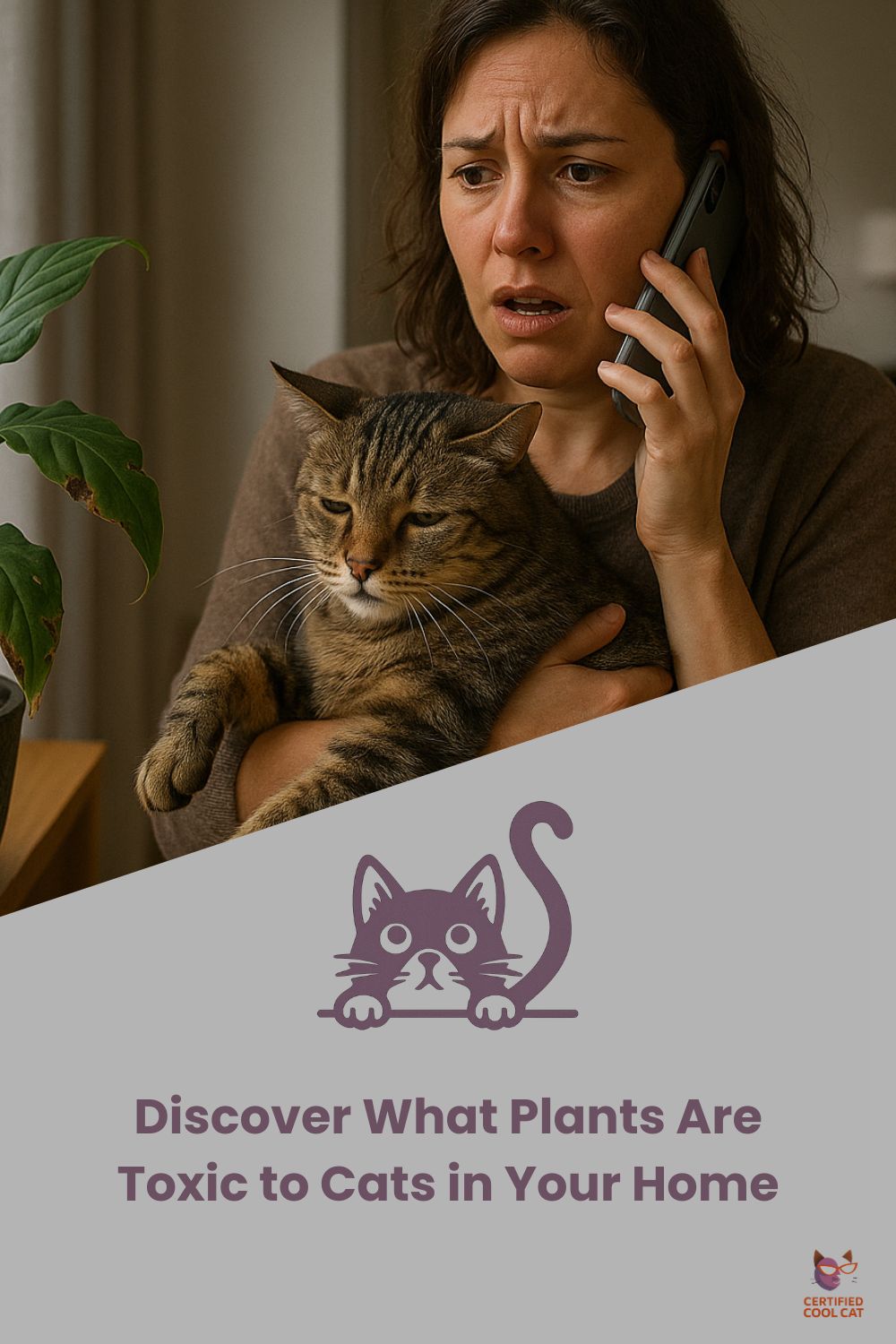
If you’re a cat parent, you’ve probably wondered at least once: what plants are toxic to cats? Good question, because a lot of those trendy houseplants on Instagram are basically kitty kryptonite. Cats are curious nibblers, and those leafy greens in your living room look like an all-you-can-eat salad bar.
Now, do cats know better? Nope. They chew plants for fun, boredom, or because grass-munching is built into their DNA. But they’re not exactly reading the warning label. So, it’s our job to keep the toxic ones out of paw’s reach.
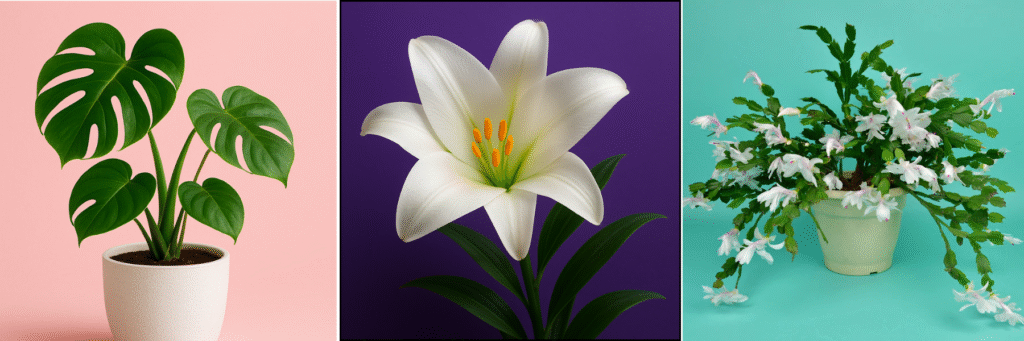
Let’s talk about the number-one offender: lilies. These flowers are gorgeous, but they’re basically death traps for cats. A lick of pollen, a bite of a petal, even drinking water from the vase can shut down a cat’s kidneys. If you love your cat, ditch the lilies. Period.
And lilies aren’t the only villains….
Peace lilies, pothos, aloe vera, snake plants, and monsteras all make the list. They might make your living room look like a jungle, but for your cat, it’s a jungle booby-trapped with nausea, vomiting, and drooling. Not the vibe you’re going for.
Outdoors isn’t much better. Azaleas, rhododendrons, tulips, daffodils, oleander, foxglove—you name it. They may look pretty in the garden, but if your cat takes a nibble, you’ll be headed for the emergency vet.
Even the holidays aren’t safe. Poinsettias may just cause mild tummy trouble, but mistletoe and holly can trigger seizures and worse. And lilies make a repeat appearance at Easter and Christmas. Seriously, it’s like they’re out to get cats.
Some plants are “mildly toxic” (think stomach upset or skin irritation). Others are “moderately toxic” (hello, vomiting and drooling). And then there are the heavy hitters—like lilies, oleander, sago palms, and foxglove—that can actually kill your cat. Yikes.
But don’t panic. You don’t have to live in a plastic-plant wasteland. Plenty of safe, stylish plants exist. Spider plants, Boston ferns, areca palms, African violets, catnip, and cat grass all get the green light. Your cat will thank you, especially for the catnip.
What if your cat ignores the memo and takes a bite of something dangerous? Act fast. Scoop the plant out of their mouth, call your vet, and ring up ASPCA Poison Control at 888-426-4435. Don’t wait for symptoms, and don’t play home chemist by trying to make your cat vomit. Bring a piece of the plant to the vet so they know what they’re dealing with.
Prevention is easier than an emergency vet bill. Keep plants out of reach, use deterrent sprays, and stick to safe greenery. Before buying a new plant, check the ASPCA’s list of toxic and non-toxic plants. It takes two minutes and can save you a lot of stress.
So, what’s the bottom line? Knowing what plants are toxic to cats could save your buddy’s life. Lilies, aloe, pothos, snake plants—the usual suspects—are all bad news. But there are plenty of safe options that won’t turn your living room into a danger zone.
Toxic vs. Safe Plants for Cats
| Plant Name | Toxic or Safe | Symptoms if Toxic | Cat-Safe Alternative |
|---|---|---|---|
| Lilies | ❌ Toxic | Kidney failure, vomiting, death | Spider Plant |
| Monstera | ❌ Toxic | Drooling, mouth irritation | Areca Palm |
| Pothos | ❌ Toxic | Oral burns, vomiting, swallowing trouble | Boston Fern |
| Aloe Vera | ❌ Toxic | Vomiting, diarrhea, lethargy | Cat Grass |
| Snake Plant | ❌ Toxic | Nausea, drooling, vomiting | African Violet |
| Oleander | ❌ Toxic | Heart failure, death | Catnip |
| Sago Palm | ❌ Toxic | Liver failure, seizures, death | Bamboo Palm (safe variety) |
| Poinsettia | ⚠️ Mild Toxic | Drooling, stomach upset | Christmas Cactus |
| Tulips/Daffodils | ❌ Toxic | Vomiting, diarrhea, heart issues | Blue Echeveria (succulent) |
| Spider Plant | ✅ Safe | None — completely safe | N/A |
| Boston Fern | ✅ Safe | None — completely safe | N/A |
| Areca Palm | ✅ Safe | None — completely safe | N/A |
| African Violet | ✅ Safe | None — completely safe | N/A |
| Catnip/Cat Grass | ✅ Safe | None — provides enrichment | N/A |
And since you might still have questions, here are a few quick ones cat parents ask all the time:
Can cats recover after eating a toxic plant?
Sometimes, if you act fast. But with things like lilies or sago palms, the odds aren’t great.
Are succulents safe?
Not always. Aloe and jade plants are toxic. Echeveria and haworthia are safe.
Do dried or cut flowers still count?
Yes. Even dried lilies can still hurt your cat.
What about essential oils?
Bad idea. Tea tree, eucalyptus, citrus, and many others are toxic when cats inhale or absorb them.
Which plants do people overlook?
Sago palms, cyclamen, kalanchoe, and amaryllis sneak under the radar but can be very dangerous.
How can I be sure a plant is safe?
Easy—check the ASPCA’s plant list before you buy.
At the end of the day, you can have a gorgeous home and a safe cat. You just need to know which plants belong on the “nope” list. And trust me—your cat will be just as happy lounging under a Boston fern as they would under a lily, but you’ll be a lot happier knowing they’ll live to do it.