
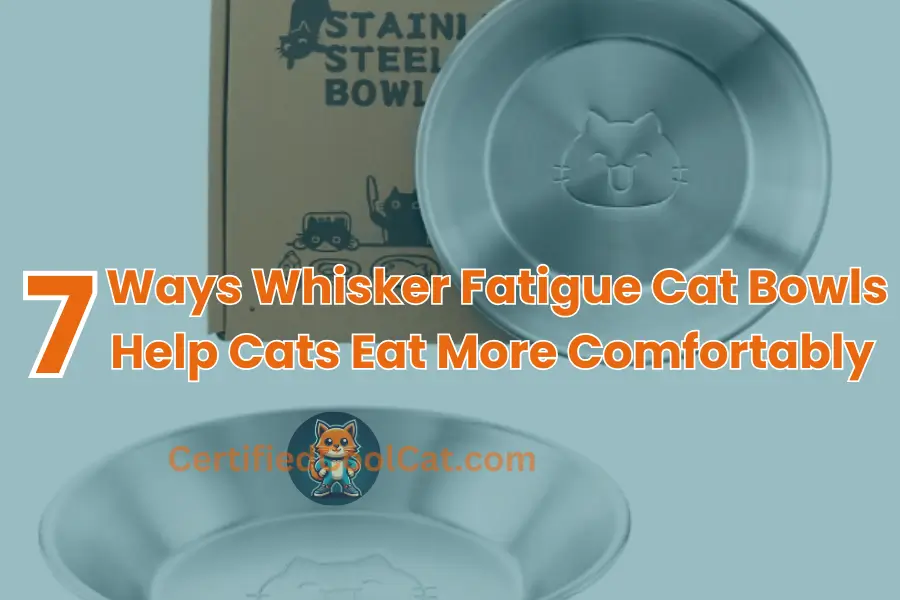
Does your cat hesitate before eating, pull food out of the bowl, or seem restless at mealtime? These could be signs of whisker fatigue—a common but often overlooked issue in cats. Whisker fatigue cat bowls are designed to eliminate this discomfort, allowing cats to eat more comfortably and stress-free.
In this article, we’ll explore how whisker fatigue affects cats, why traditional bowls can cause issues, and the seven ways whisker fatigue cat bowls improve mealtime comfort. If you’ve ever wondered why your cat avoids its food bowl, the solution might be simpler than you think!
What Is Whisker Fatigue?
How a Cat’s Whiskers Work
Cat whiskers, known as vibrissae, are highly sensitive touch receptors. They help cats navigate tight spaces, detect movement, and maintain spatial awareness. These whiskers are deeply embedded in the skin and connected to nerves, making them extremely responsive to touch and pressure.
Signs of Whisker Fatigue in Cats
Cats experiencing whisker fatigue may show these signs:
- Hesitating before eating or appearing frustrated at mealtime
- Pulling food out of the bowl to eat from the floor
- Eating only from the center of the bowl, leaving the edges untouched
- Pawing at food or tipping over the bowl
- Walking away from a full bowl despite being hungry
How Traditional Cat Bowls Cause Whisker Fatigue
Most standard cat bowls are too deep and narrow, causing whiskers to constantly brush against the edges. This repeated stimulation overwhelms the sensory receptors, leading to stress and discomfort. Over time, cats may develop negative associations with mealtime, reducing their food intake and causing unnecessary stress.
7 Ways Whisker Fatigue Cat Bowls Help Cats Eat More Comfortably
1. Prevents Whisker Overstimulation
Whisker fatigue cat bowls have a wide, shallow design, preventing whiskers from making constant contact with the bowl’s sides. This eliminates unnecessary sensory overload, allowing cats to eat in peace without discomfort.
2. Encourages Consistent Eating Habits
When cats experience discomfort at mealtime, they may hesitate to eat or only nibble at their food. A whisker-friendly bowl removes this barrier, promoting regular and healthy eating habits. This is especially important for picky eaters or cats recovering from illness.
3. Reduces Food Spillage & Mess
Many cats with whisker fatigue will scoop food onto the floor rather than eat from an uncomfortable bowl. A proper whisker-friendly bowl keeps food accessible, reducing mess and preventing unnecessary waste. Non-slip bases further help by preventing the bowl from moving during mealtime.
4. Helps Picky Eaters Feel More at Ease
Some cats refuse food due to reasons beyond taste—whisker discomfort is often the hidden culprit. By switching to a whisker fatigue cat bowl, cats feel more at ease, which can improve their overall appetite. If your cat avoids its food but seems interested, changing the bowl may be the solution.
5. Supports Senior & Sensitive Cats
Older cats and those with dental issues, arthritis, or reduced appetite benefit significantly from whisker fatigue cat bowls. Since they don’t have to dig or nudge food uncomfortably, these bowls provide a more relaxed and enjoyable eating experience. This is particularly helpful for senior cats who may struggle with mobility or pain.
6. Reduces Mealtime Anxiety & Frustration
A stressful eating experience can lead to mealtime anxiety, causing some cats to become aggressive, restless, or avoid their food altogether. A well-designed whisker fatigue cat bowl removes this unnecessary stressor, ensuring that cats associate mealtime with comfort and relaxation instead.
7. Promotes Better Posture & Eating Position
Many whisker-friendly bowls also incorporate elevated designs, reducing strain on the neck and spine. This is beneficial for senior cats, brachycephalic (flat-faced) breeds, and cats prone to digestive issues. A better eating position can prevent bloating, indigestion, and discomfort, leading to an all-around healthier cat.
How to Choose the Best Whisker Fatigue Cat Bowl
Key Features to Look For
When selecting a whisker fatigue cat bowl, look for these key features:
- Wide and shallow design → Prevents whisker contact with the sides
- Durable materials → Stainless steel or ceramic for hygiene and longevity
- Non-slip base → Prevents tipping and movement during eating
- Easy to clean → Dishwasher-safe for convenience
Top Recommended Whisker Fatigue Cat Bowls
“Here’s a little transparency: Our website contains affiliate links. This means if you click and make a purchase, we may receive a small commission. Don’t worry, there’s no extra cost to you. It’s a simple way you can support our mission to bring you quality cat care content.”
Here are some highly-rated whisker fatigue cat bowls:
- Dr. Catsby’s Bowl for Whisker Relief – Stainless steel, non-slip base, sleek design
- Necoichi Extra Wide Raised Bowl – Elevated ceramic bowl, ideal for senior cats
- Frisco Shallow Cat Dish – Affordable, dishwasher-safe, simple yet effective
These bowls are designed specifically to reduce whisker stress and improve mealtime comfort, making them a great investment for your cat’s well-being.
Additional Tips for a Comfortable Mealtime
Besides choosing the right bowl, here are some extra tips to enhance your cat’s eating experience:
- Bowl Placement Matters → Keep the bowl in a quiet, low-traffic area to reduce stress
- Use a Feeding Mat → Helps keep the feeding space clean and prevents food spills
- Consider an Elevated Feeder → Reduces neck strain, especially for senior cats
- Test Different Materials → Some cats prefer ceramic over stainless steel or vice versa
Conclusion
Whisker fatigue is a real and often unnoticed problem that affects many cats. The good news is that switching to a whisker fatigue cat bowl can make a world of difference in your cat’s comfort and eating habits.
By choosing the right bowl, you can prevent overstimulation, encourage healthy eating habits, and reduce stress at mealtime. Investing in a whisker-friendly bowl is a simple yet effective way to ensure your cat enjoys every bite without discomfort.
Has your cat experienced whisker fatigue? Share your experience in the comments! 😺