
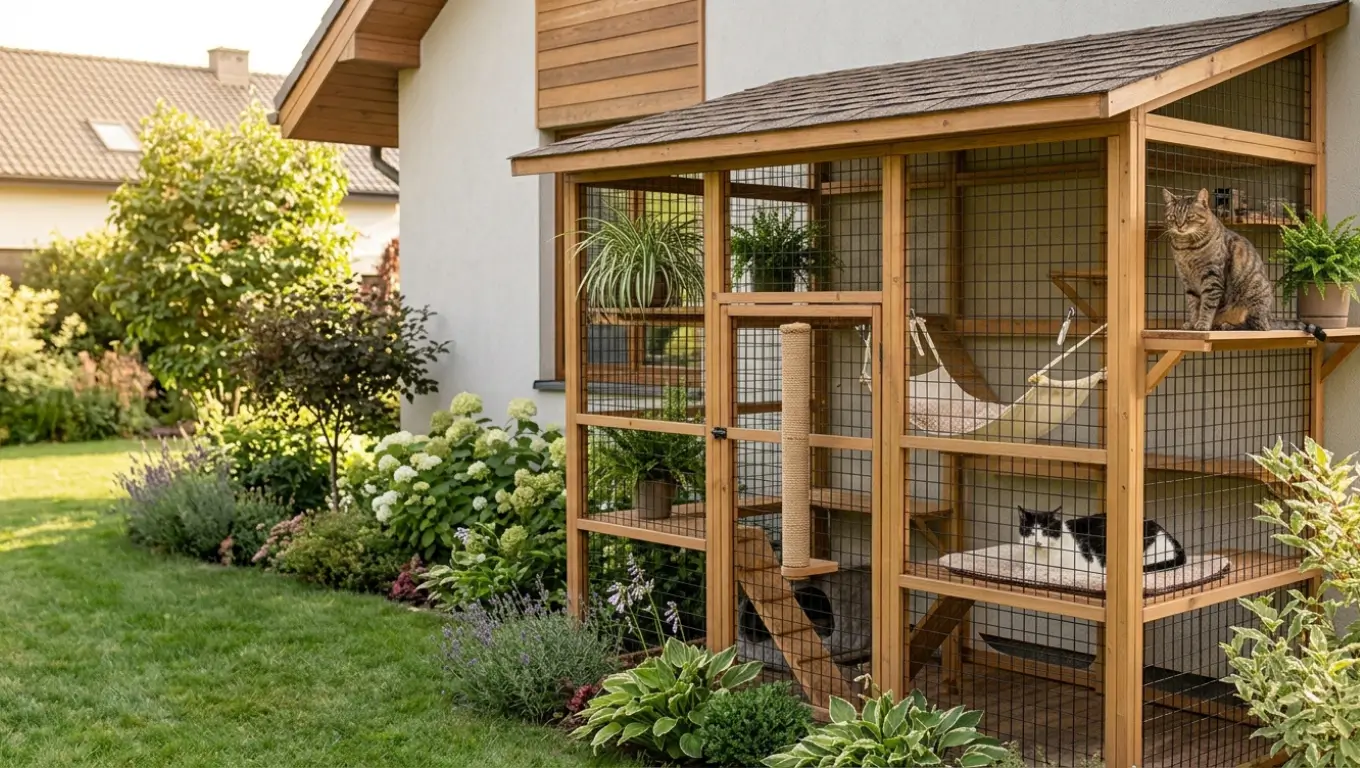
If your indoor cat spends half the day staring through a window, these catio ideas can help bring the outdoors a little closer. A good catio gives your cat fresh air, sunshine, new smells, and plenty to watch without giving them free rein of the neighborhood.
And you don’t need a huge backyard to build one.
Catios can be as simple as a small enclosure outside a window. They can also become impressive backyard playgrounds filled with tunnels, shelves, hammocks, and climbing areas. The trick is finding a design that fits your home, budget, and cat.
Here are 15 ideas to get you started.
What Is a Catio?
A catio is an enclosed outdoor space built for cats. Think of it as a patio with whiskers. Some catios attach directly to a house through a window or cat door. Others stand alone in the backyard and connect to the house with an enclosed tunnel.
You can build one yourself, buy a kit, or have one custom-built. The important part is containment. Your cat gets the sights, sounds, and smells of being outside while remaining inside a secure enclosure.
15 Catio Ideas for Happy Indoor Cats
There’s no single perfect catio design. A good choice depends on your available space and how your cat likes to spend its time. Here are some of my favorite catio ideas, starting with one of the simplest.
1. Start Small With a Window Catio
A window catio is a great choice when you’re short on space. The enclosure sits outside a window, giving your cat a secure place to lounge outdoors. Open the window, and your cat can walk into their little observation deck.
Add a padded perch or weather-safe mat for comfort. If possible, place the enclosure where your cat can watch birds, squirrels, and backyard activity. It’s also a good starter project if you’re unsure how much your cat will use a larger catio.
2. Build a Simple Box Catio
Take the window concept one step further with a larger box-style enclosure. A basic frame, secure mesh, roof, and sturdy platform can create plenty of room for lounging. You don’t necessarily need much floor space.
Cats love height, so think upward. Adding two or three secure platforms can make a small catio much more interesting without making its footprint larger.
3. Turn Your Porch Into a Catio
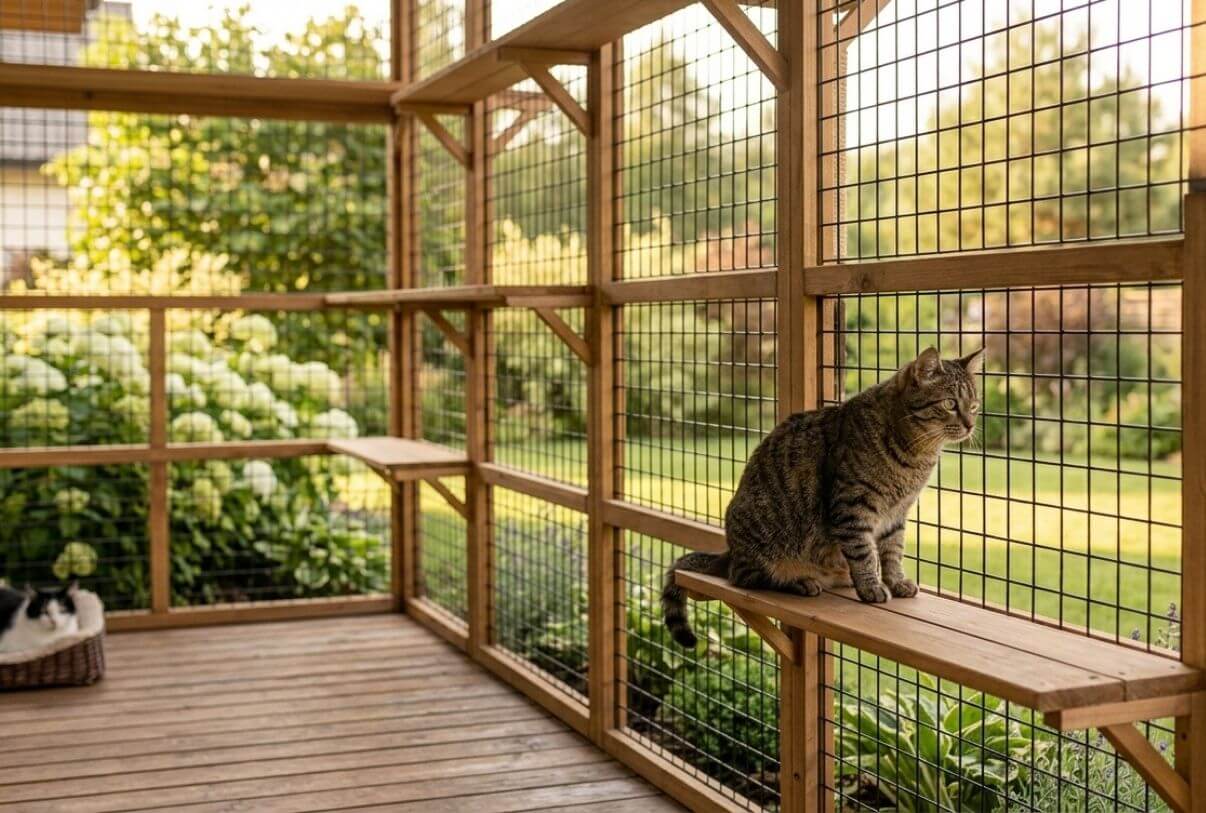
Already have a porch?
You may have the bones of a fantastic catio sitting outside your door. A porch can be enclosed with suitable cat-secure screening or mesh. Add shelves, scratching areas, beds, and climbing spots, and you’ve created a roomy outdoor hangout.
Pay close attention to doors and small gaps. A determined cat can squeeze through openings that don’t look very impressive to us. If you’re making major changes, check local rules and any homeowner or rental restrictions first.
4. Create a Balcony Catio for Small Spaces
Apartment and condo cats don’t have to miss all the fun. A balcony can sometimes become an outdoor cat space, but safety comes first. Regular balcony railings are not enough to contain a cat. The open areas need to be securely enclosed with appropriate material, including overhead escape routes where needed.
Then make use of vertical space. A hammock, elevated bed, scratching post, and secure perch can make a small balcony much more interesting. Renters should always get permission before making permanent changes.
5. Use the Side of Your House
That skinny strip between your house and fence might not seem useful. Your cat may disagree.
A long, narrow catio can run along the side of a home without taking over the backyard. Add platforms at different heights so your cat can climb while traveling through the enclosure.
You can even create separate activity areas. One end might have a high observation platform while the other provides a shady sleeping spot. For cats, interesting space often matters more than wide-open space.
6. Connect Your Catio With a Tunnel
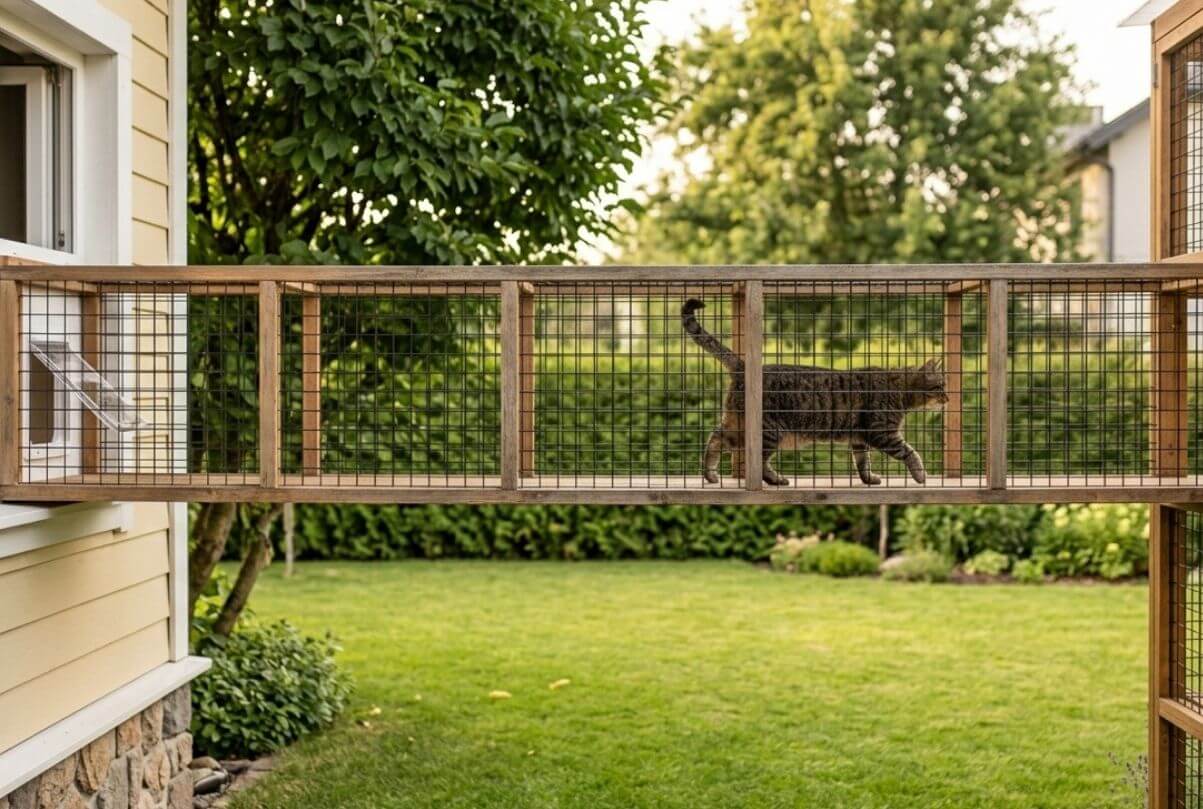
This is where catios start getting really fun. An enclosed tunnel can connect a window or cat door to a larger enclosure elsewhere in your yard. Your cat gets a protected pathway to explore, and you gain more freedom when choosing where to place the main catio.
Longer tunnels should be sturdy and easy to inspect. You’ll also want secure connections at every joint. You could even incorporate turns, raised sections, or lookout points. It’s basically a feline freeway, minus the traffic jams.
7. Build a Catio Around an Existing Window
Instead of hanging a small enclosure from your window, build a larger catio around it. The window becomes the entrance. Your cat can step directly from the house onto a shelf or platform inside the enclosure.
This design saves you from cutting another opening through an exterior wall. It can also make controlling access easy because you can simply close the window when needed.
Add platforms near the entrance so your cat immediately has somewhere interesting to go.
8. Turn an Old Gazebo Into a Catio
Have an old gazebo that isn’t doing much? It could become one impressive cat hangout.
Start by checking the structure for rotten wood, rust, roof damage, or anything unstable. Once you’re confident the frame is sound, the open sides can be enclosed with suitable cat-secure mesh.
A gazebo gives you room for shelves, scratching posts, hammocks, beds, and climbing structures. You’ll also have enough room to walk inside for cleaning and maintenance.
9. Add a Freestanding Backyard Catio
Want a Catio Without Building From Scratch?
If you like the idea of a roomy catio but don’t want to design one yourself, the Aivituvin Window Catio Outdoor Cat Enclosure is worth a look.
Its large walk-in design includes six platforms and two scratching posts, giving cats several places to climb, perch, scratch, and relax.
Best for: Cat owners who want a spacious outdoor enclosure without taking on a complete DIY catio build.
(paid link)
Not every catio needs to touch the house. A freestanding enclosure can work well when attaching something to your home’s exterior isn’t practical. You could build one yourself or consider a prebuilt outdoor cat enclosure.
Larger models can provide plenty of room for climbing, sleeping, scratching, and watching the yard. You’ll still need a safe way for your cat to reach it. You might carry your cat in a secure carrier or connect the enclosure to your home with a protected tunnel.
For larger structures, I like having a human-sized door. Your back may thank you on cleaning day.
10. Create a Multi-Level Catio
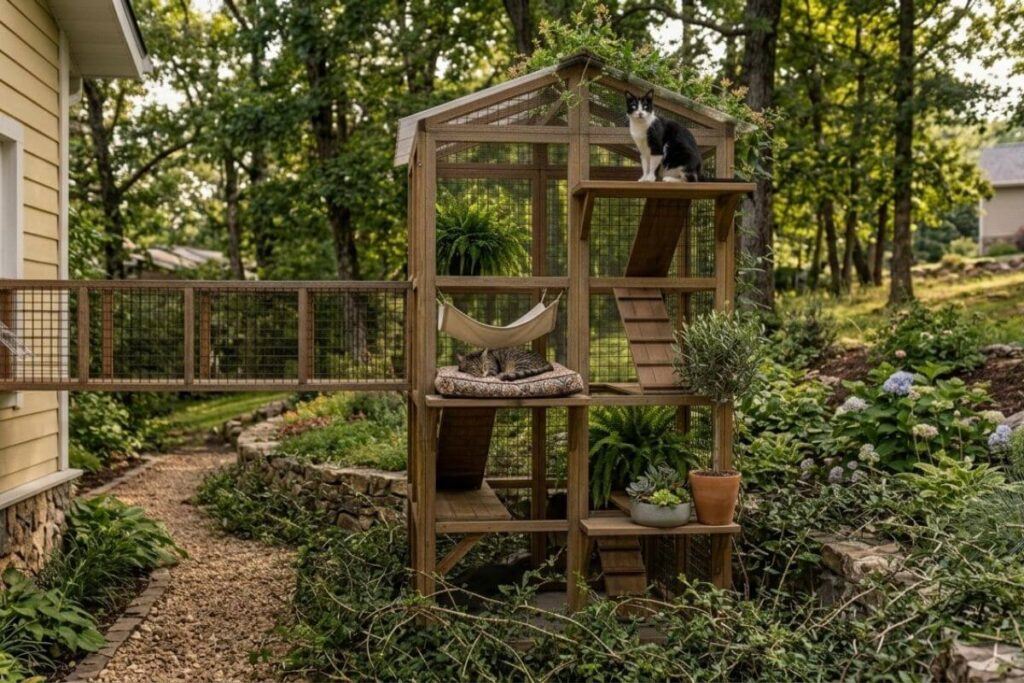
If you can’t build outward, build upward. Many cats enjoy sitting above ground level where they can watch what’s happening around them. Create several levels with sturdy platforms, shelves, steps, or ramps.
You might have a low lounging area, a middle shelf, and a high lookout perch. Older cats or cats with mobility issues may appreciate ramps and shorter distances between platforms.
Make sure every shelf is securely attached. A cat launching onto a platform can put more force on it than you might expect.
11. Make Your Catio Look Like a Tiny House
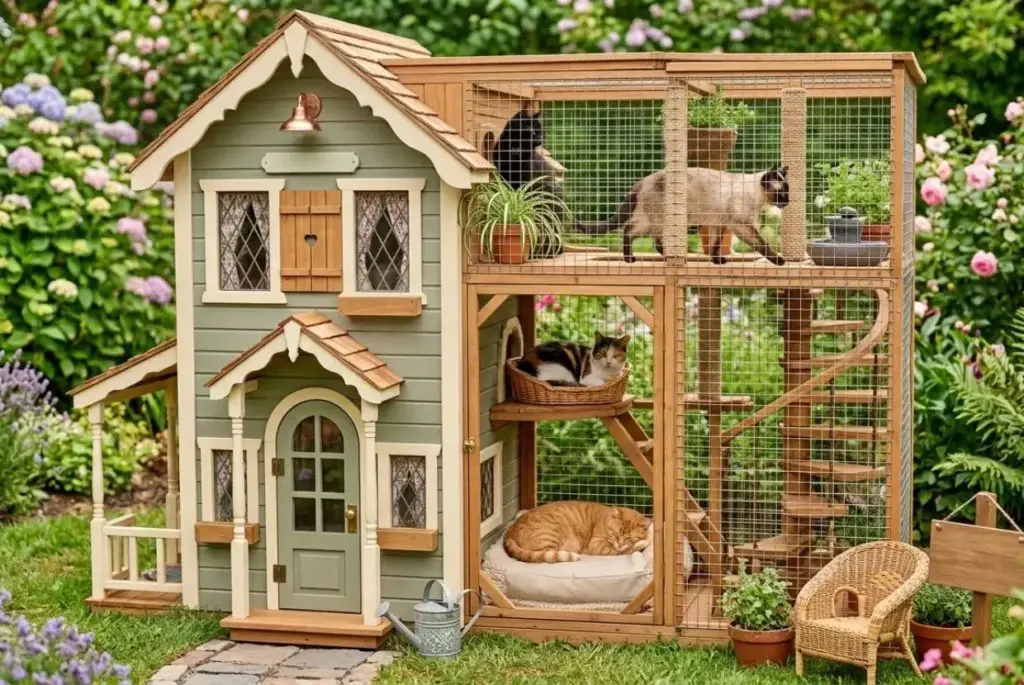
A catio doesn’t have to look like a cage stuck against your house. Make it part of your backyard design. You could match the roof, trim, stain, or other details to your home. Some elaborate catios look like tiny cottages built just for their furry residents.
You can add decorative touches while keeping the enclosure practical. This is one of my favorite ideas for anyone who wants a catio that looks as good as it works. Your cat probably won’t appreciate the matching trim. Your neighbors might.
12. Create a Cat-Safe Garden Catio
A little greenery can make a catio feel more natural. Try adding cat-safe plants, pots of cat grass, or other suitable greenery. Natural textures can make the enclosure more interesting too.
Just don’t assume a plant is safe because it’s sold at your local garden center.
The ASPCA maintains an excellent list of toxic and non-toxic plants for cats that you can check before adding plants to your catio. Many common plants can be harmful to cats, so verify each one before putting it within chewing distance. Also avoid pesticides and other lawn or garden chemicals your cat could contact.
13. Build Around Climbing and Scratching
Don’t judge a catio only by its square footage. A smaller enclosure packed with useful vertical space may provide more enrichment than a big empty box.
Build around activities your cat already enjoys. Add a sturdy scratching post, climbing platforms, ramps, and resting shelves. You can also use different scratching surfaces to give your cat some variety.
Make sure freestanding items can’t tip over. And don’t fill every inch. Your cat still needs open space to move comfortably between activities.
14. Design a Shady Summer Catio
Summer changes what makes a good catio. A space that feels wonderful on a mild spring morning could become far too hot during a summer afternoon. So, here’s what I recommend.
- Include covered sections and shaded resting areas. Good airflow is also important.
- Keep fresh drinking water available during longer outdoor sessions.
- Pay attention to where the sun moves throughout the day. A corner that’s shaded at 9 a.m. might be baking in direct sunlight by 3 p.m.
- Most importantly, don’t assume an enclosure makes extreme heat safe.
When temperatures become dangerous, bring your cat indoors.
15. Build the Ultimate Catio Playground
Ready to dream big? Combine several of these ideas into one large cat playground.
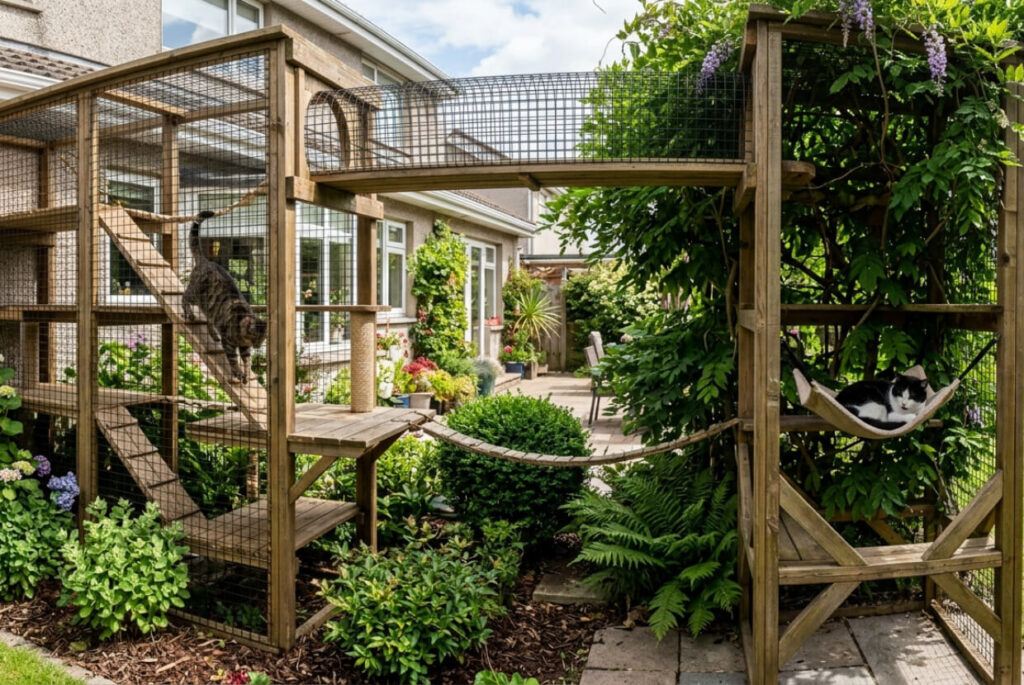
Create an enclosed tunnel leading from your house into a multi-level backyard catio. Add lookout platforms, hammocks, scratching areas, climbing structures, shaded beds, and cat-safe plants.
I like the idea of creating different zones.
Observation Zone
Put a high perch where your cat can watch birds, squirrels, people, and everything else happening outside.
Resting Zone
Create a quiet shaded area with a comfortable hammock or bed.
Activity Zone
Add scratching posts, ramps, shelves, and climbing structures.
Nature Zone
Use verified cat-safe plants and natural textures to make part of the enclosure feel more like a garden.
Just don’t cram everything together. Your cat needs room to move, stretch, and choose where to spend time.
What Should You Put Inside a Catio?
Once you’ve chosen the structure, it’s time for the fun part. You don’t need to fill your catio with expensive gear. Start with a few things that support natural cat behavior.
Want a Catio Without Building From Scratch?
If you like the idea of a roomy catio but don’t want to design one yourself, the Aivituvin Window Catio Outdoor Cat Enclosure is worth a look.
Its large walk-in design includes six platforms and two scratching posts, giving cats several places to climb, perch, scratch, and relax.
Best for: Cat owners who want a spacious outdoor enclosure without taking on a complete DIY catio build.
(paid link)
Add a Comfortable Catio Hammock
Want to make better use of your catio’s vertical space? The QIPAN Cat Hammock for Cage gives your cat an elevated spot for lounging without taking up valuable floor space.
This reversible hammock has a waterproof nylon side and a soft flannel side, making it a practical option for a covered or weather-protected catio.
Best for: Adding a cozy elevated resting spot to a covered catio or outdoor cat enclosure.
(paid link)
Add a Scratching Spot Without Taking Up Floor Space
A catio needs more than places to perch. The FUKUMARU Natural Sisal Cat Scratcher Mat gives cats a dedicated surface for scratching while keeping the layout simple and uncluttered.
The large sisal mat can be used horizontally or mounted vertically, making it a flexible option for catio walls, wooden supports, shelves, or other secure surfaces.
Best for: Cat owners who want to add scratching enrichment without using a bulky scratching post.
(paid link)
Give Your Cat a Cool Place to Relax
Shade is important during hot weather, but you can also give your cat a cooler place to stretch out. The K&H Coolin’ Pet Pad is designed to provide a cool resting surface without electricity.
The water-activated pad requires no refrigeration and can be used outdoors when kept well shaded, making it a practical addition to a covered summer catio.
Best for: Adding a cool resting spot to a shaded catio during warm weather.
(paid link)
Give Your Cat Places to Climb
Use secure shelves, platforms, steps, and ramps to create vertical space. Different heights give your cat choices. They can climb when they’re energetic and settle onto a high perch when it’s time to supervise the neighborhood.
Create Comfortable Lookout Spots
Every good catio needs somewhere comfortable to do absolutely nothing. Add a hammock, weather-appropriate bed, or sheltered platform. Try positioning one resting area where your cat has a clear view of the yard.
Add Scratching Opportunities
A scratching post gives your cat another activity besides bird watching. Consider both vertical and horizontal scratching surfaces.
Whatever you use, make sure it stays stable when your cat pulls against it.
Provide Water and Shade
For longer catio visits, make fresh water easy to reach. Keep the bowl or fountain out of direct sunlight when possible. Your cat should also have access to shade throughout the time they’re outside.
Bring In Cat-Safe Plants
Plants can add smells, textures, movement, and visual interest. But check every plant first. Even plants classified as non-toxic can cause stomach upset if a cat eats enough plant material, according to the ASPCA.
How to Make a Catio Safe for Your Cat
A beautiful catio isn’t worth much if your cat can escape from it. Check every connection, corner, door, and opening before allowing access. Use sturdy enclosure material rather than ordinary insect screening. Make sure doors latch securely and your cat can’t push through gaps around windows, tunnels, or roof connections.
Look inside for sharp edges, exposed fasteners, loose cords, unstable shelves, and small objects your cat could swallow.
Then look outside. Wild animals may approach the enclosure even though they can’t enter it. Your cat should always have somewhere to retreat if another animal makes them nervous.
Inspect the structure regularly for rust, rot, damaged mesh, loose hardware, or new gaps. I’d supervise your cat’s first several visits closely. You’ll quickly learn whether you’ve built a peaceful lounging spot or accidentally created an escape-room challenge.
Where Is the Best Place to Put a Catio?
Look for a location that combines shade, airflow, a good view, and easy access. A spot outside a frequently used window can work especially well.
Think about weather too.
Where does rain collect? Which direction does strong wind come from? How much direct afternoon sun hits the area?
You should also check the surrounding landscaping for toxic plants and chemicals.
Your cat doesn’t need the best view in town. A safe view of birds, trees, insects, and normal backyard activity can provide plenty of entertainment.
How Much Does a Catio Cost?
Catio costs vary too much for one price tag to cover it all. Size, materials, labor, roofing, location, and whether you build or buy all make a difference.
Budget Catios
Small window enclosures and basic DIY designs can keep material needs down. If you’re working with a limited budget, spend money on structural safety first. Fancy decorations can wait.
Mid-Range Catios
A larger DIY enclosure or catio kit gives you more room for shelves, roofing, and enrichment. This is probably the sweet spot for many homeowners.
Large or Custom Catios
Large walk-in catios can include tunnels, custom carpentry, multiple levels, landscaping, and elaborate climbing systems. They can be amazing. They’re also proof that cats somehow convince us to renovate property they don’t pay taxes on.
DIY vs. Prebuilt Catio: Which Is Better?
Neither option automatically wins.
Choose DIY If You:
- Enjoy building things.
- Want a custom shape or size.
- Have an unusual yard or window layout.
- Already own the necessary tools.
- Want control over materials and features.
Consider Prebuilt If You:
- Want to reduce the design work.
- Don’t own many tools.
- Prefer predetermined dimensions.
- Want components designed to fit together.
Either way, careful assembly matters. A prebuilt enclosure still needs regular safety inspections just like something you make yourself.
Frequently Asked Questions About Catios
Can I Leave My Cat Alone in a Catio?
That depends on the enclosure, weather, wildlife, your cat, and how access is controlled.
Start with supervised sessions. Don’t assume that a secure-looking enclosure is automatically suitable for long periods without supervision.
Does a Catio Need a Roof?
A catio should have a secure top that prevents your cat from climbing out and helps keep other animals from entering. You may also want solid or shaded sections for weather protection.
Can I Build a Catio Without Attaching It to My House?
Yes.
Freestanding catios can sit elsewhere in the yard. You can connect one to your house with an enclosed tunnel or securely transport your cat to it.
What Is the Best Material for Catio Walls?
Choose sturdy, securely attached material designed to contain your cat. Consider the opening size, strength, weather resistance, attachment method, and wildlife in your area. Ordinary insect screening shouldn’t be treated as secure cat containment.
Can I Have a Catio if I Live in an Apartment?
Possibly.
Window and balcony catios can work in some apartments, but you’ll need to consider building rules and landlord approval. Balcony installations require special care because a failure at that height can have serious consequences.
What Should I Use for a Catio Floor?
Options include existing decking, concrete, pavers, and other suitable outdoor surfaces.
Think about drainage, cleaning, heat, and comfort. You can soften hard surfaces by adding safe resting areas rather than covering the entire floor.
Do Indoor Cats Really Enjoy Catios?
Many cats enjoy the sights, sounds, smells, and activity they experience outdoors. But cats have individual personalities. Introduce the catio gradually and let your cat choose whether to explore. A nervous cat shouldn’t be forced outside just because you spent all weekend building the thing.
Create a Catio Your Cat Will Actually Use
The best catio isn’t necessarily the biggest one. It’s the one that works for your home and gives your cat a secure, comfortable, and interesting place to spend time.
Start with your available space and budget. Then think about your cat’s age, mobility, personality, and favorite activities.
A young climber might adore tall platforms and tunnels. An older cat may be perfectly happy with a sunny window enclosure and a comfortable bed.
Whichever design you choose, focus on secure construction, shade, fresh water when needed, comfortable resting spots, and things your cat can watch and explore.
With so many catio ideas to choose from, you don’t need a giant backyard or giant budget to get started. Sometimes a window, a perch, some fresh air, and a really good view are all a cat needs to feel like they own the neighborhood.