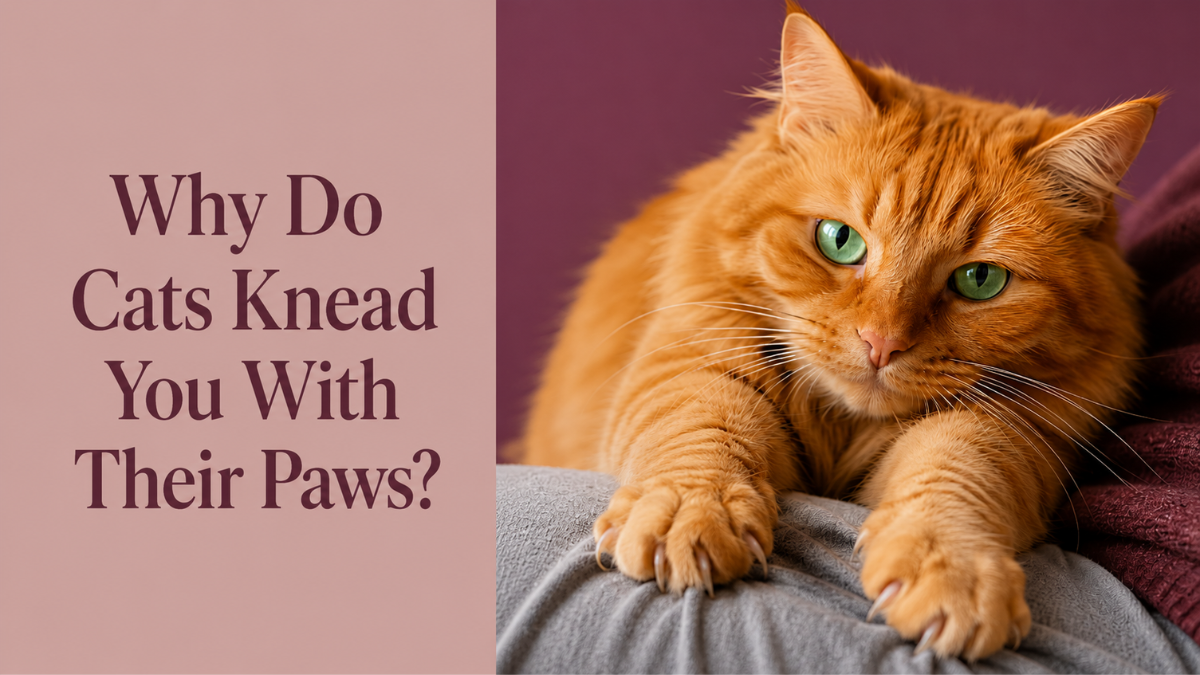
Cats kneading with their paws is one of those quirky feline habits that leaves a lot of people curious. And you might be wondering, why do cats knead you with their paws, and dig their daggers into you?
I’m pretty familiar with this behavior, and every time my cat settles into my lap and starts rhythmically pressing her paws in and out, I get a mix of warmth and curiosity. You might have felt those gentle (sometimes not-so-gentle) cat paws working away on your lap or maybe your favorite blanket.
So here’s the lowdown on why cats knead, what it means, and how to learn to appreciate this classic cat behavior.
What Is Cat Kneading?
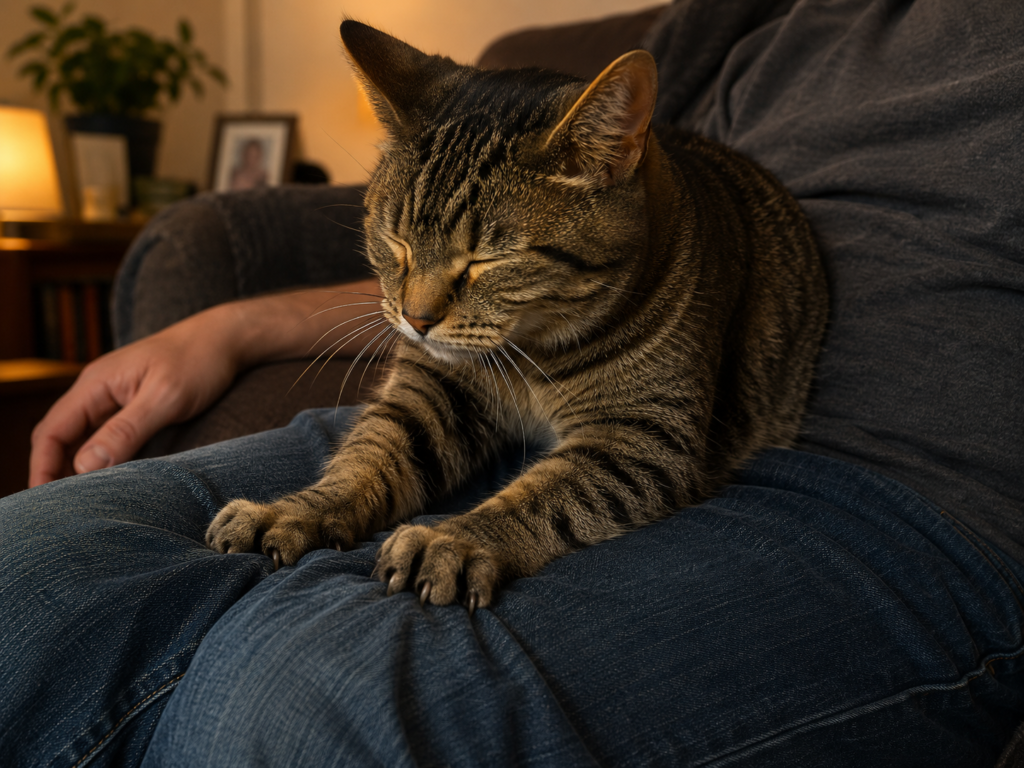
Kneading is when a cat pushes its front paws in and out against a soft surface, working them one at a time in a repetitive motion. Sometimes they purr while doing it, sometimes their claws pop out, and if you’re the lucky surface, you’re probably familiar with the slight pinching feeling.
No pain, no gain, right? The “gain” I’m talking about is this means the cat is comfortable with you. Cat owners often call this behavior “making biscuits” because it looks like the way dough is prepared for baking.
You may think this squeezing motion is just another random thing Fluffy does, but that’s not the case at all. Cats tend to do it in very specific situations.
The Many Reasons Cats Feel the Need To Knead
Showing Affection: When my cat kneads my lap, I take it as her way of saying she feels close to me. This is a pretty common sign of trust and contentment. So, take that pinching feeling and understand it’s only out of love.
Marking their territory: Cats have scent glands in their paws. When they knead, they transfer some of their scent onto you, marking you as “theirs.” It’s a subtle thing but can mean a lot in a cats world.
Comfort and relaxation: Kneading seems to help cats wind down. I’ve seen my cat settle in for a nap after a good kneading session, looking very cozy and peaceful. It is also mostly ok to pet cats when they’re kneading. In fact, petting just enhances the relaxing experience a lot of the time.
However, keep in mind not all cats are the same and have different personalities. Some like to just zone out and don’t want to be disturbed. So, if you get an annoyed look from your furball I suggest to back off.
Going back to kittenhood: The connection to early nursing is strong, and some experts think kneading is a leftover habit from kittenhood, offering comfort and reassurance even as adults.
Kneading and Communicating
Kneading isn’t something that cats do just for a reason to dig their claws into you. There is reasoning behind it. One of those reasons is letting us know how they are feeling. If your cat kneads you, it could mean they’re in a good mood or looking to bond.
Sometimes, it’s their way of telling you that they’re happy with the current situation, or with you in particular.
I watch for other signs like purring, slow blinking, or relaxed body language at the same time, which usually means my cat is absolutely relishing the experience. On the flip side, if a cat seems stressed but kneads hard, it could be a self-soothing action. In these moments, I try to give her more space or a soft surface to help her relax.
When Kneading Happens Most
Kneading can happen for a bunch of reasons, but it usually shows up most often during these times:
- Before settling down: Cats often knead right before sleeping, sort of like tucking themselves in. This could go way back to their wild ancestors, who may have kneaded grass or leaves to make a nest.
- When feeling safe: If your cat lets her guard down and starts kneading on you, she feels safe and chill. It’s almost like a compliment in cat language.
- During moments of affection: I see a lot of kneading when my cat is cuddling with me on the couch or first thing in the morning. Sometimes, she brings out the purrs, too.
Kneading in the Wild: The Ancestral Link
Kneading isn’t just a house cat thing. It comes from a long history of wild feline ancestors. Wild cats often knead grass and leaves to make a soft resting spot. This habit made their nests more comfortable and probably kept away insects as well. Even today, kneading helps cats find the perfect spot to rest or gives them that soothing feeling before sleep. Many scientists believe this behavior is hardwired into them, which is why even strictly indoor cats go through the motions.
I find it fascinating how modern house cats still carry these ancient instincts. Even city cats that have never seen a wild patch of grass will knead a pillow or your favorite hoodie out of sheer habit.
Cool Facts and Cat Kneading Myths
Male cats knead too: It’s not just female or younger cats; males knead as well, especially if they’re feeling relaxed or attached. This cuts across breeds and ages.
Kneading with claws out isn’t aggressive: Sometimes cats flex their claws while kneading, but it’s totally normal and not a sign of aggression. They’re just really into what they’re doing.
Not all cats knead: Some cats never knead, and that’s okay too. Every cat has its own personality, just like people.
Common Questions About Cat Kneading

Why do some cats knead more than others?
Every cat is unique. Some knead all the time, while others rarely do it. It often comes down to individual personality and how they were raised. Life experiences, early weaning, and breed can all play a part in their tendencies for kneading.
Is kneading a sign my cat thinks I’m its parent?
Kneading is strongly linked to happy kitten memories with their mother, so some people believe cats view kneading as an affectionate action similar to what they did when nursing. I actually don’t know for certain. Either way, it means your cat really trusts you and might see you as a comforting presence.
Can kneading go away with age?
Some older cats knead less as they age, but plenty keep kneading right into their senior years. For example, I had a cat, NeeWee, (It was actually my sister’s cat. I didn’t name him that haha!) that always kneaded while sucking on a blanket. Like he was still in nursing phase for his whole life (We always thought he must have been in a state of arrested development). He was still a healthy cat though, so no worries about cats needing, or not needing, to knead. No big deal.
It’s all about individual comfort and personality. Sometimes changes in kneading can also be linked to medical issues like arthritis, making it harder for older cats to do that motion, so keep that in mind.
The Bottom Line on Cat Kneading
Cat kneading is a pretty fascinating mix of instinct, memory, and communication. Whenever I see my cat kneading, I remember that it’s her way of feeling safe and showing trust. Even if you sometimes end up with a few claw marks, it’s a small price to pay for all that endearment Fluffy bestows upon you.
If your cat is a big kneader, then make yourself comfortable. Keep a soft blanket close by and enjoy having a cat who feels right at home with you. It’s one of those simple little acts that tells you she thinks you’re awesome, and it’s just another reason cats are such eye-catching pets to share your space with.